
Showcasing Wild Java at World Wildlife Day Regional Youth Symposium 2026

JAWI participated in the World Wildlife Day Regional Youth Symposium 2026, a two-day event held from Saturday (28/3) to Sunday (29/3) at BCA Academy, Singapore. This prestigious forum brought together young people from across Asia to discuss wildlife conservation, environmental health, and the role of youth in protecting biodiversity. World Wildlife Day (WWD) is a global celebration observed annually on March 3 to appreciate biodiversity around the world. The day also commemorates the signing of the Convention on International Trade in Endangered Species of Wild Fauna and Flora (CITES) in 1973, an important international agreement that regulates wildlife trade to ensure it does not threaten species survival.
What is the World Wildlife Day Regional Youth Symposium 2026?
The World Wildlife Day Regional Youth Symposium 2026 is part of the global World Wildlife Day celebrations, initiated through NParks’ Youth Stewards for Nature programme. The event serves as a collaborative platform for young people across Asia to learn, exchange ideas, and showcase their conservation initiatives. With the theme “Exploring Intersections Among Wildlife Trade, Wildlife Health, and Wildlife Conservation”, the symposium highlights the strong connections between wildlife trade, animal health, and their impacts on human health through the One Health approach. Participants came from diverse backgrounds, including students, NGOs, researchers, and conservation practitioners across Asia.

Represented by Farah Dini Rachmawati, JAWI, together with Wild Space, presented the Wild Java initiative during the Youth Showcase session. This exhibition featured 39 poster booths representing youth-led projects from across Asia. Through this session, JAWI introduced biodiversity conservation efforts in the Kemuning Forest, Temanggung, Central Java, Indonesia, while also opening opportunities for cross-country collaboration.
Learning Global Issues: From Wildlife Trade to Environmental Health
During the symposium, participants attended panel discussions covering two main topics:
- Wild Deals, Viral Consequences
- Human-Wildlife Interfaces
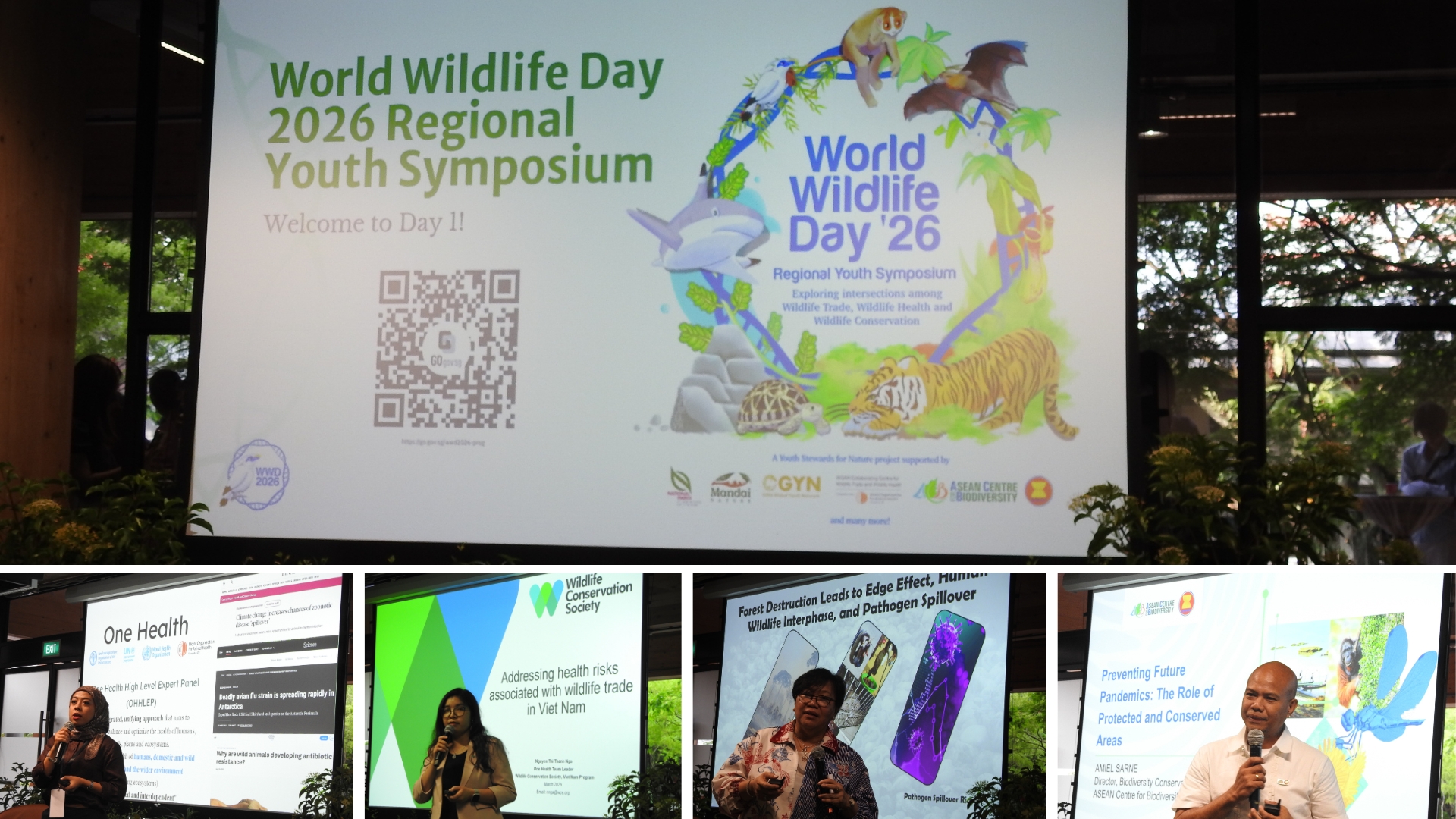
These discussions emphasized the One Health concept, highlighting how wildlife and environmental health directly impact human health. Increased human-wildlife interaction, often driven by deforestation, can elevate the risk of disease transmission between animals and humans. Wildlife trade further amplifies this risk, as pathogens have been detected along wildlife supply chains. Several key solutions discussed, such as
- Strengthening law enforcement
- Raising public awareness about the importance of wildlife protection
- Promoting sustainable socio-economic systems, including regulated legal wildlife trade for better monitoring
- Reducing direct contact between wildlife, domestic animals, and humans
- Enhancing cross-border collaboration
- Developing early warning systems for disease detection and mitigation
Beyond discussions, participants also joined field workshops. One of the sessions attended by JAWI took place at the mangrove ecosystem of Sungei Buloh Wetland Reserve in Singapore. Here, participants learned about mangrove restoration, bio-surveillance, and migratory bird conservation. Originally designated as a national park, the area was later upgraded to a nature reserve to strengthen protection. The visit highlighted successful mangrove restoration efforts that have supported the return of wildlife such as saltwater crocodiles and otters and reinforced the site’s importance as a stopover for migratory birds from Russia and China route to Indonesia and Australia.

The Role of Youth in Conservation
The symposium reaffirmed the crucial role of youth in safeguarding the environment. Some key actions young people can take include:
- Raising awareness through social media
- Building cross-community collaborations
- Conducting research and advocacy
JAWI’s participation in this forum marks an important step in bringing Indonesia’s conservation efforts to the regional stage. Beyond expanding networks, this engagement strengthens the role of Indonesian youth in the global movement to protect biodiversity. With a spirit of collaboration and innovation, JAWI remains committed to contributing to wildlife and ecosystem conservation.

 Oleh Admin

